
Introducing Melacak: consignment tracking without the spreadsheet chaos
If you sell on consignment in Indonesia, your "system" is probably a spreadsheet. One tab per store, one row per product, and a growing sense that the numbers stopped matching reality months ago.
We built Melacak because we lived that spreadsheet.
The consignment problem
Consignment selling means your stock lives in someone else's store. You ship goods out, the store sells what it can, and you settle later for what actually sold. Simple in theory — but multiply it by ten stores and a hundred products and three questions become surprisingly hard to answer:
- Where is my stock right now? Shipped, on the shelf, sold, or lost?
- Who owes me what? Settlements depend on per-store prices and what each store actually sold.
- What should I restock? Without per-store sales history, you are guessing.
Spreadsheets answer none of these reliably, because every answer depends on every shipment, sale, and return being typed in twice and never mistyped once.
One dashboard instead of ten tabs
Open Melacak and the first screen already answers the daily questions: how much stock is in your warehouse, how much is sitting at partner stores, and how much money is waiting in pending settlements — with a sales-versus-settlements chart and a live feed of your latest sales, shipments, and settlements underneath.
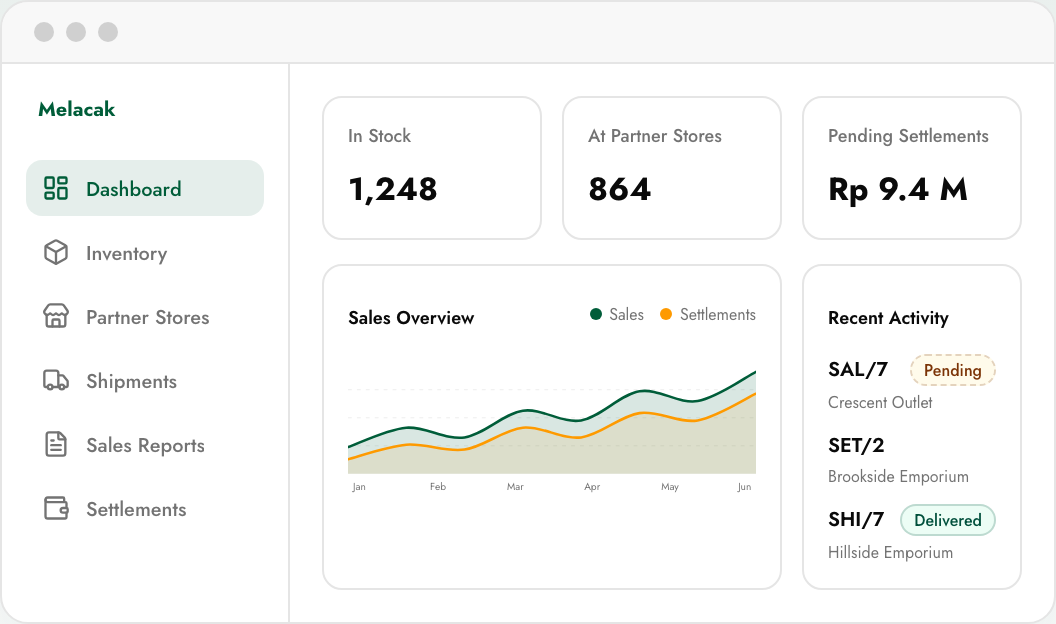
Everything in the app hangs off that same ledger, so the numbers on the dashboard are the same numbers in your reports — not a copy you have to reconcile.
What's inside
Inventory that can't oversell. Products, brands, and stock levels live in one place. Every stock movement is atomic: the app refuses to let a sale or shipment draw more stock than a location actually has, so counts stay trustworthy even when several people work at once.
Partner stores with their own prices. Each store gets its own catalog and price list — because the mall outlet and the neighborhood shop rarely sell at the same price. Store pages show exactly what's on consignment there and how it's selling.
Shipments in, shipments out. Record what you send to each store and what comes back. Stock at the store goes up, warehouse stock goes down, automatically and always in balance.
Sales and settlements that follow the goods. Log sales as they happen (or import them), then settle per store: Melacak calculates what each store owes you from its own prices and its actual sales, and generates store-facing documents and printable invoices for the handover.
Reports for restocking decisions. Per-store and per-product sales history shows what moves where, so the next shipment is a decision, not a guess.
Shopee integration. Connect your Shopee store and bring those orders into the same ledger as your consignment sales.
A team, not a bottleneck. Invite staff with their own logins, so recording sales doesn't have to wait for the owner's laptop.
All of it works in Bahasa Indonesia and English, with prices in Rupiah — not a generic inventory tool with a translation layer, but an app built around how titip jual actually works.
Try it
You can try Melacak free — setup takes minutes, and your first store is one shipment away from being trackable.